Have you heard of Hillsborough? It is seen as a tragedy from the past that sits in history books, documentaries, and annual remembrances. However, Hillsborough is not only about what happened in 1989. The issues it exposed continue to shape how we think about policing, public safety, and accountability today.
Hillsborough was about decision-making under pressure, as choices that were made in the past carried serious consequences. When those decisions failed, the response was not openness or reflection. Instead, it became defensive. That reaction is not limited to one event or one time period. It remains a familiar pattern whenever institutions are challenged.
Modern policing still faces questions about transparency and trust. After serious incidents, communities often ask the same things families asked after Hillsborough. Who made the decisions. What evidence exists. Will the truth be shared fully and honestly. These questions remain relevant because the systems responsible for public safety have not changed as much as many people believe.
One of the clearest lessons from Hillsborough is the danger of closing ranks. When institutions focus on protecting themselves, listening stops. Dialogue disappears. This creates a lasting distance between authorities and the public. Once trust is lost, rebuilding it can take generations, not years.
Public accountability depends on independent oversight, as Hillsborough showed what happens when oversight is weak, delayed, or resisted. For example, families were forced to fight for years simply to reopen investigations, and similar struggles can still be seen today when communities feel excluded from processes meant to protect them.
Moreover, another ongoing issue is how quickly narratives form after tragedy. Early assumptions following Hillsborough shaped media coverage and official responses. Once those narratives settled, they became difficult to undo. This still happens today. Initial statements often carry more weight than later corrections, even when new evidence emerges.
Hillsborough also highlights the human cost of delayed accountability. Survivors and families lived for years with uncertainty. They were expected to move forward without answers. That expectation remains common in modern cases, where time is treated as a solution rather than truth.
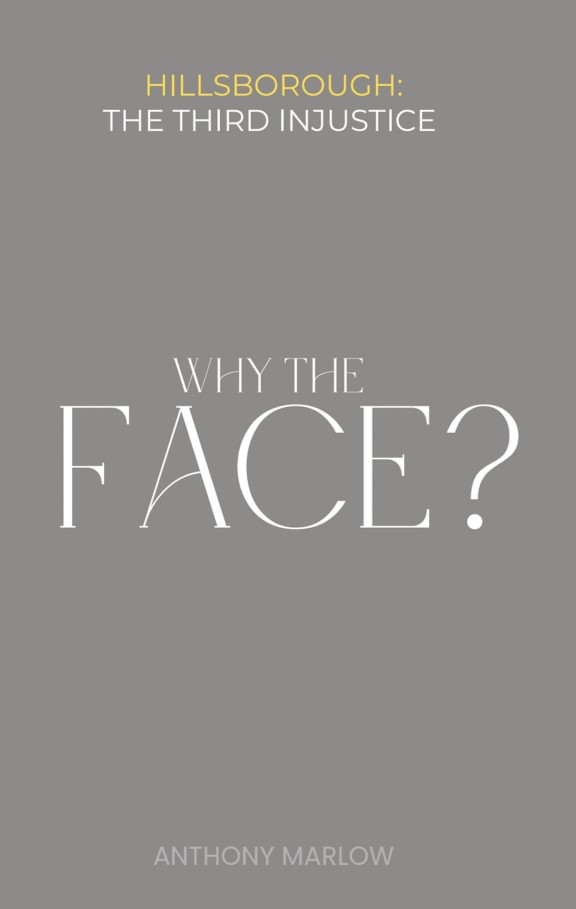
Anthony Marlow’s Why the Face? Hillsborough: The Third Injustice makes clear that Hillsborough should not be viewed as an isolated failure. It belongs within wider discussions about how states respond to mistakes. The book asks readers to think carefully about what accountability really means. Is it a statement? A report? Or a willingness to face uncomfortable facts? By reading this book, you are invited to look beyond familiar accounts of the Hillsborough disaster and focus on what happened after the tragedy. Why the Face? Hillsborough: The Third Injustice by Anthony Marlow draws on lived experience and careful examination of evidence to explore how unanswered questions, disputed records, and institutional resistance shaped decades of struggle for truth.
Head to Amazon to purchase yuor copies: https://www.amazon.com/dp/B0G5BK2NYL.
Rather than retelling the events of the day, the book examines the long aftermath, where evidence was questioned and accountability delayed. It restores humanity to those affected and challenges readers to consider why justice remains unfinished, making it an important and thoughtful contribution to the Hillsborough narrative.
That being said, the relevance of Hillsborough lies in its warning. Justice is not automatic. It requires persistence, openness, and humility from those in power. Without these, the same patterns repeat, keeping us in the loop of false beliefs and manipulation.